Why Ybor City's Mold Problem Isn't Like the Rest of Tampa's
Most restoration companies treat every Tampa neighborhood the same way: humid climate, standard construction, standard process. That approach doesn't hold up in Ybor City, because the actual building materials here are genuinely different from anywhere else covered on this site — and that changes how mold develops, where it hides, and how it should be handled.
Ybor City is a National Historic Landmark District, designated in 1990, listed on the National Register of Historic Places since 1974, and home to more than 950 historic structures. Most of these buildings were constructed between 1886 and World War I — brick cigar factories, wrought-iron-balconied storefronts, and the shotgun-style worker cottages known as casitas that housed the Cuban, Spanish, and Italian immigrants who built this district. That's not 'old' in the way a 1970s ranch house is old. It's a fundamentally different construction era and method.
Brick and Heavy Timber Behave Differently Than What Most Tampa Homes Are Built From
The original cigar factories — and much of the historic core along and around Seventh Avenue — were built with load-bearing brick walls and heavy timber framing: solid wood columns and beams supporting wooden floors and ceilings, not the light wood-frame or concrete-block construction common in most of Tampa's newer neighborhoods.
That matters for moisture in a specific, practical way. Brick is porous. Over more than a century, mortar joints degrade, and moisture can wick into brick walls and stay there far longer than it would in drywall or vinyl siding — often without any visible sign on the interior surface until the problem is well established. And because so much of the structural support in these buildings is wood — heavy timber columns, beams, and flooring, not just framing hidden behind finished walls — sustained moisture isn't only a mold concern here. It can affect the structural wood itself, which is a different level of urgency than a typical residential mold job.
Historic Landmark Status Changes How Remediation Has to Work
Because Ybor City carries National Historic Landmark designation, many buildings here fall under preservation guidelines that affect what modifications are allowed during repairs. That's a real, practical consideration — remediation in a building like this often calls for a more careful, less invasive approach than a standard tear-out-and-replace job, especially where original brick, timber, or architectural detail needs to be preserved rather than removed. A remediation company that doesn't understand this can end up recommending — or performing — work that conflicts with what a historic property actually requires.
From Cigar Factories to Restaurants: Ybor City's Commercial Character
Ybor City isn't primarily residential the way South Tampa or Davis Islands are. A huge share of the district's historic buildings have been converted from their original industrial use — cigar manufacturing — into restaurants, bars, galleries, offices, and event space. That shift matters for mold risk in a few specific ways: commercial kitchens generate constant heat and humidity, older HVAC retrofits in buildings never originally designed for air conditioning can create condensation issues where ductwork passes through century-old brick and timber, and high-occupancy entertainment and dining spaces have less tolerance for the kind of closure a mold problem can force than a private home does.
For a restaurant or bar operating out of a converted Ybor City storefront, a hidden moisture problem isn't just a property issue — it's a business-continuity issue, and one that often needs to be handled with health-code and occupancy considerations that a residential mold job simply doesn't have.
Ybor City's Decline-and-Revival History Still Shows Up in Its Buildings Today
This isn't trivia — it's directly relevant to what we find during inspections. Ybor City's cigar industry declined through the mid-20th century, and by the 1960s and 70s, many buildings sat vacant or neglected for years, in some cases decades. Interstate 4's construction also demolished parts of the district in that era. Restoration efforts didn't really take hold until the 1980s, ahead of the 1990 Landmark designation.
What that means practically: a lot of Ybor City's historic buildings went through a long stretch of minimal maintenance before renovation, and moisture problems that started during those neglected decades don't necessarily resolve just because a building was later restored and reoccupied. We regularly find mold and moisture damage tracing back to conditions that predate a property's current use entirely — which is part of why a surface-level inspection isn't always enough here.
Where We Typically Find Mold in Ybor City Properties
Based on the district's construction era, materials, and mixed-use character:
Behind original brick walls
degraded mortar joints allowing slow moisture wicking, often invisible until interior finishes are affected
Around heavy timber structural elements
columns, beams, and original wood flooring where trapped moisture is both a mold risk and a structural one
In converted commercial kitchens
restaurants and cafés operating in century-old buildings, where cooking humidity meets aging structure
Around retrofitted HVAC and ductwork
systems added to buildings never originally designed for them, especially where ducts pass through masonry
In upper-floor residential conversions and lofts
former factory space converted to apartments, where original roof and window conditions weren't always addressed during conversion
Along original roof lines and parapet walls
flat or low-slope roofing common on commercial-era buildings, with drainage patterns different from residential pitched roofs
Our Mold Remediation Services in Ybor City
Whether you're in a brick-and-timber commercial space or a residential casita, we apply the same licensed process — adapted to what historic properties actually need.
Inspection & Assessment
We check the areas that matter most in Ybor City's building stock — brick mortar joints, heavy timber structural elements, and retrofitted HVAC penetrations — using moisture meters and thermal imaging to find what isn't visible on the surface.
Containment
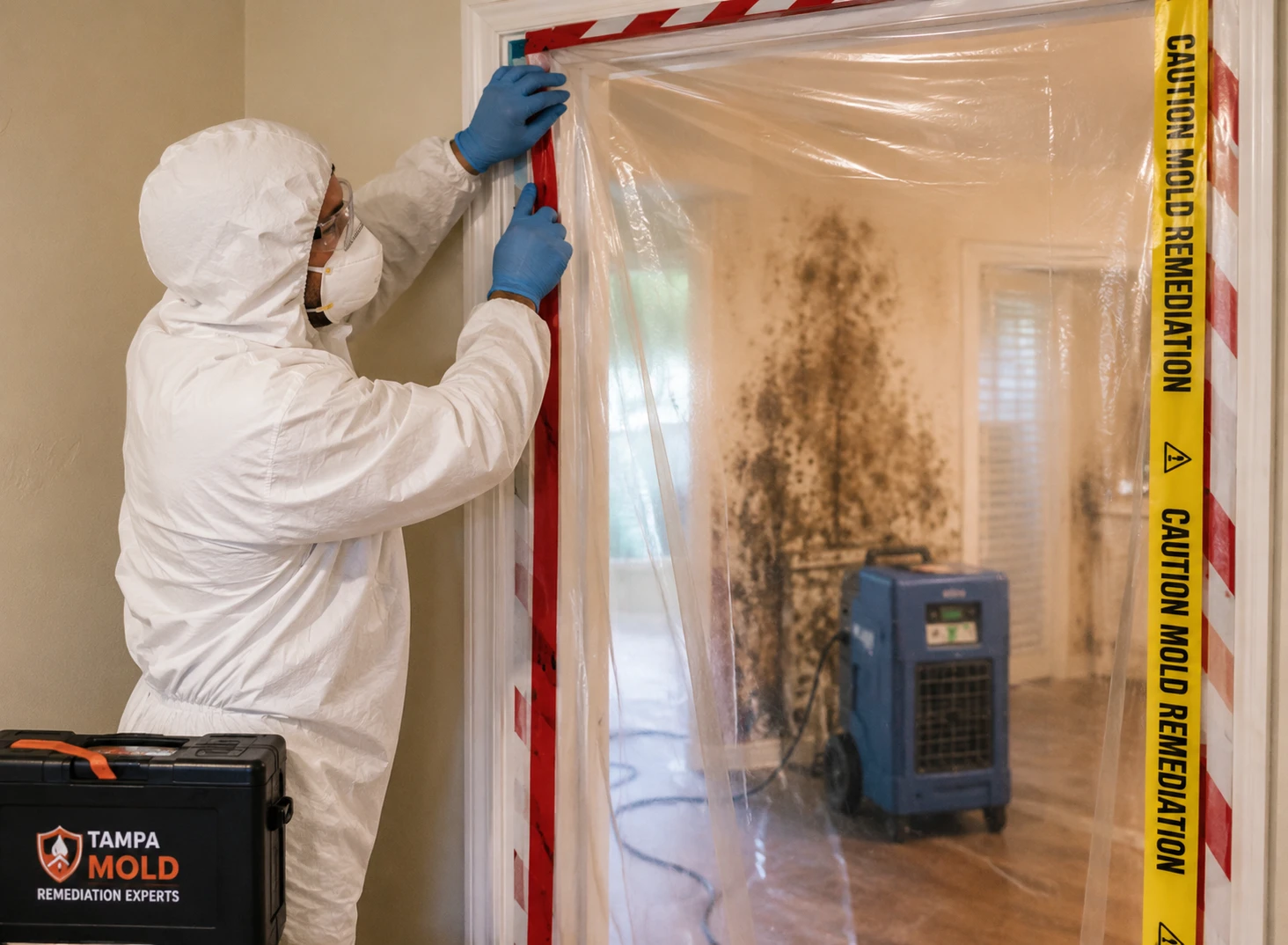
We seal off the affected area to prevent spore spread, adapted to whatever the space actually is — a residential casita, a restaurant kitchen, or a converted loft.
Removal & Treatment
Contaminated materials are safely removed and treated with antimicrobial solutions, with extra care taken around original brick and timber elements that need preservation rather than replacement.
Moisture Source Correction
We identify what's actually feeding the mold — degraded mortar, an HVAC retrofit issue, a roof drainage problem, or moisture dating back to the building's neglected decades — because removing mold without fixing the source just means it returns.
Verification
We confirm the area is genuinely clear before calling the job complete.
For full technical detail on our process and equipment, see our mold remediation & removal page — this page focuses on what's specific to Ybor City properties.
Our Services for Ybor City Properties
Mold Inspection & Testing
Identifying hidden moisture in brick walls and heavy timber structures
Learn more →Black Mold Removal
Safe removal from historic buildings and commercial conversions
Learn more →Water Damage Restoration
Response to roof leaks and HVAC failures in century-old structures
Learn more →Water Extraction & Mitigation
Fast water removal for commercial spaces and residential casitas
Learn more →Odor Removal
Addressing musty odors common in aging brick and timber buildings
Learn more →Air Quality & Purification
Post-remediation air scrubbing for restaurants and occupied historic spaces
Learn more →Residential & Commercial in Ybor City
Ybor City is genuinely mixed-use — worker cottages and residential lofts alongside restaurants, bars, galleries, and offices in converted historic buildings. We handle both: residential mold jobs tied to a casita's age and construction, and commercial jobs where fast, discreet response matters to protect ongoing business operations and avoid closure.

Get a Free Inspection in Ybor City
If you own or operate a property in Ybor City — a historic residence, a converted commercial space, or anything with original brick or timber construction — a free inspection tells you what's actually happening in the structure. We know what to look for here, and we'll tell you honestly what we find.
Why Ybor City Trusts Us
Meet Your Mold Specialists
Every black mold remediation project is handled directly by a licensed, certified professional — not an untrained subcontractor.
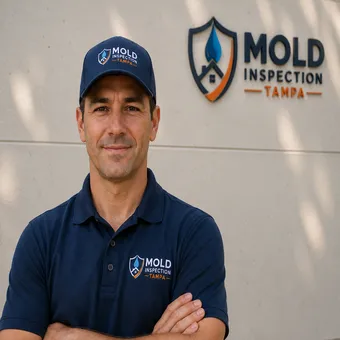
Michael Carter
Founder & Lead Mold Remediation Specialist
- 12+ years mold remediation experience
- IICRC-Certified Technician
- Florida Licensed & Fully Insured
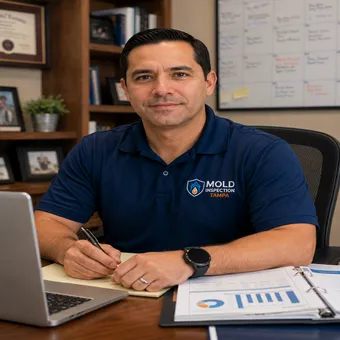
Daniel Rodriguez
Operations Manager
- Oversees all remediation projects
- IICRC-Certified
- EPA-Compliant Practices
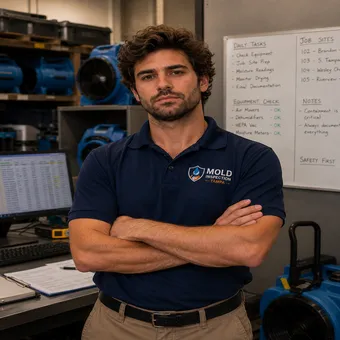
Ryan Mitchell
Senior Restoration Technician
- Specialist in containment & removal
- IICRC-Certified Technician
- EPA-Compliant Practices
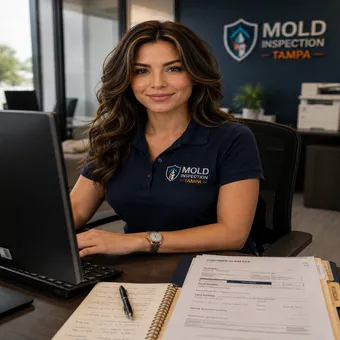
Jessica Adams
Customer Success Manager
- Single point of contact for all clients
- Insurance claim documentation support
- 12+ years customer service experience