South Tampa's Mold Problem Isn't Generic — Here's Why
Most mold companies write one page and swap the city name. That doesn't work for South Tampa, because the actual cause of mold here is specific to this peninsula — its age, its geography, and its exposure — not something you'd find the same way in a newer inland suburb.
South Tampa sits on the Interbay Peninsula, bordered by Tampa Bay to the west, Hillsborough Bay to the east, Kennedy Boulevard to the north, and MacDill Air Force Base to the south. That geography alone means water is never far away — and it shapes two very different but equally real mold risks depending on where in South Tampa you live.
Why South Tampa Homes Are Genuinely at Higher Risk
It's not just humidity — it's the plumbing underneath your floors.
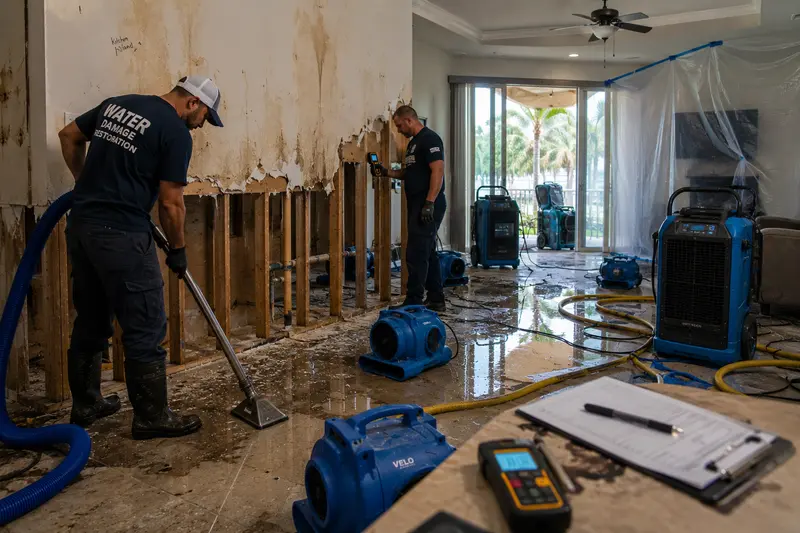
A huge share of South Tampa's housing stock — the 1920s bungalows near Ballast Point, the Mediterranean Revival homes in Beach Park and Palma Ceia, the historic properties throughout Hyde Park — were built between the 1920s and 1980s. Homes from that era typically have original galvanized steel water-supply lines, and galvanized pipe has a working lifespan of roughly 40 to 60 years. Do the math on a home built in 1955 or even 1978, and a lot of South Tampa's original plumbing is now at or past the point where internal rust and corrosion start causing slow, hidden leaks — the kind that soak into wall cavities and subflooring for months before anyone notices a stain. That's a textbook mold-feeding scenario, and it's specific to homes of this age, not a generic 'Florida is humid' explanation.
Older sewer lines add another layer: cast-iron sewer piping common in pre-1975 construction thins and cracks over decades, which can mean backups and moisture intrusion at the point where a home meets its slab. And slab leaks themselves — common across older South Tampa properties due to shifting soil beneath decades-old under-slab pipes — often show up first as a warm or slightly damp spot on a tile floor, long before there's anything visibly wrong.
There's a real financial angle here too. Florida insurers have increasingly grown cautious about homes with plumbing systems older than 40 years, in some cases affecting renewability. For South Tampa homeowners in a 1930s Palma Ceia bungalow or a mid-century Ballast Point ranch, knowing the actual condition of what's behind the walls isn't just about mold — it's about the home's insurability.
Separately, homes closer to the water face storm and flood exposure. Neighborhoods along Bayshore Boulevard, through Hyde Park, Palma Ceia, and down into Ballast Point sit largely in FEMA Zone AE, with storm surge exposure from both Hillsborough Bay and the Hillsborough River — a double exposure most of Tampa doesn't share. When Hurricane Helene pushed a storm surge of roughly 7 feet into Tampa, followed two weeks later by Hurricane Milton dumping around 16 inches of rain across Hillsborough County, homes in this part of South Tampa weren't dealing with a hypothetical risk — many saw it directly, and mold growth in the weeks after was a real, common follow-on problem for properties that took on water.
Put those two factors together — aging plumbing feeding slow hidden leaks, and direct storm/flood exposure along the waterfront — and South Tampa genuinely has two distinct, overlapping paths to a mold problem that a lot of other Tampa neighborhoods don't combine the same way.
Where We Typically Find Mold in South Tampa Homes
Based on the property types and construction patterns common across the peninsula:
Original bathrooms in 1920s-60s homes
small, often poorly-ventilated, with original tile and grout that hides moisture well
Behind walls near old supply lines
especially in homes with original or partially-updated galvanized plumbing
Around slab penetrations
where aging under-slab pipes are most likely to develop leaks
Attics in older Hyde Park and Beach Park homes
original roof structures with ventilation that wasn't designed for modern insulation standards
Ground-floor areas of homes closer to Bayshore and Ballast Point
the properties most exposed to storm surge and post-storm humidity
HVAC systems in homes with retrofitted ductwork
added air conditioning in structures never originally designed for it can create condensation issues where ducts pass through older wall cavities
Our Mold Remediation Services in South Tampa
We handle the full path from inspection to a verified clean result, using the same licensed process across every South Tampa property, whether it's a 1920s Hyde Park bungalow or a newer build near Westshore.
Inspection & Assessment
We locate visible and hidden mold using moisture meters and thermal imaging — especially important in older homes where slow leaks behind original plumbing rarely show themselves on the surface right away.
Containment
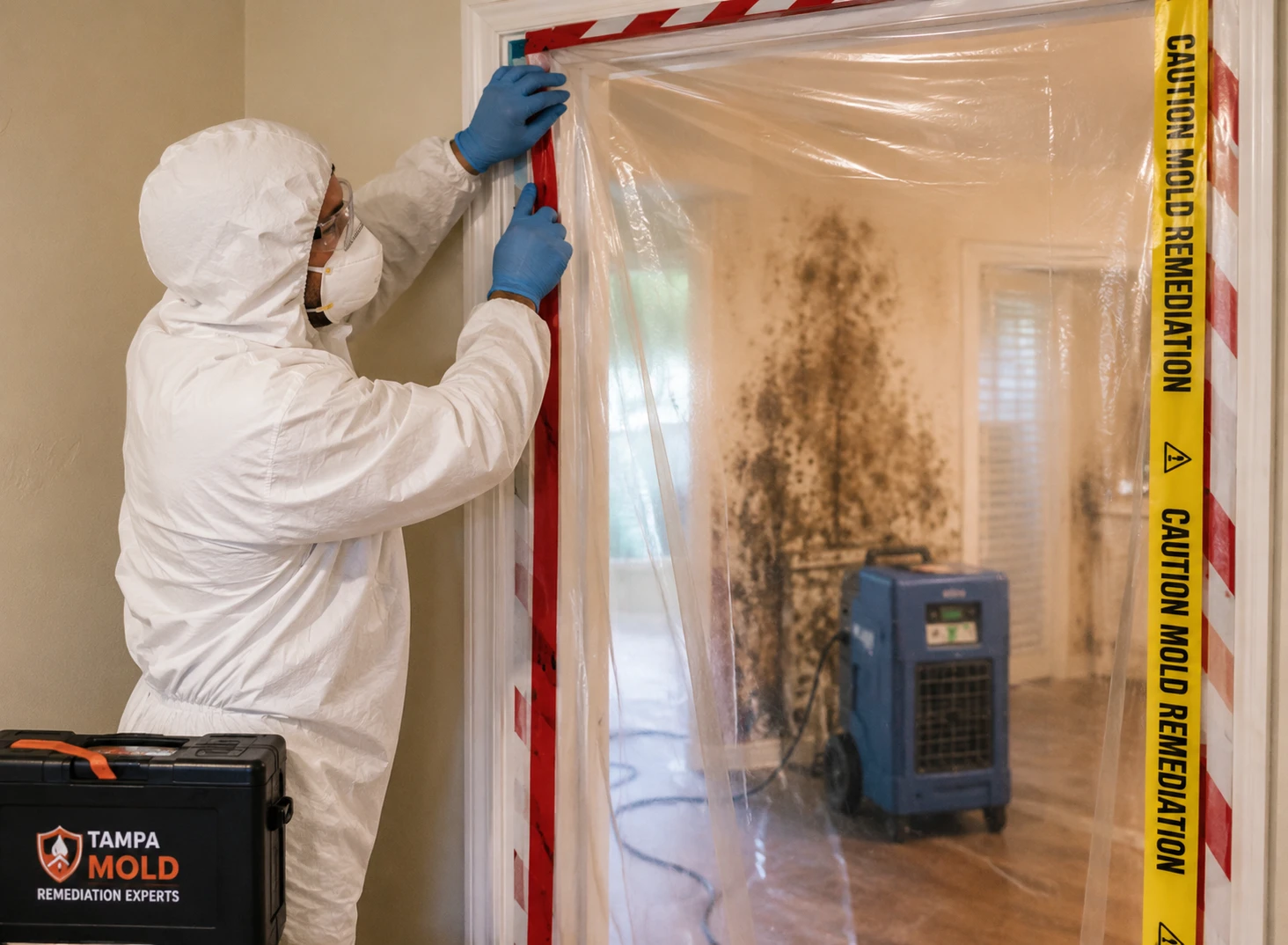
We seal off the affected area to prevent spores from spreading into unaffected rooms during removal — a step that matters even more in the tighter floor plans common to South Tampa's historic bungalows.
Removal & Treatment
Contaminated materials are safely removed and surfaces treated with antimicrobial solutions, following the same EPA-aligned protocol regardless of mold species.
Moisture Source Correction
We identify what's actually feeding the mold — whether that's an aging pipe, a slab leak, or storm-related water intrusion — because removing mold without fixing the source just means it comes back.
Verification
We confirm the area is genuinely clear before calling the job complete.
For full technical detail on our process and equipment, see our mold remediation & removal page — this page focuses on what's specific to South Tampa properties.
Our Services in South Tampa
Full-service mold and water damage support for South Tampa's homes and businesses.
Mold Inspection & Testing
Identifying hidden mold in older bungalows and post-storm properties
Learn more →Black Mold Removal
Safe removal from South Tampa's historic and waterfront homes
Learn more →Water Damage Restoration
Fast response for storm surge and pipe-failure damage along Bayshore and Ballast Point
Learn more →Water Extraction & Mitigation
Emergency water removal for flooding and burst-pipe events
Learn more →Odor Removal
Eliminating musty odors common in older, less-ventilated South Tampa homes
Learn more →Air Quality & Purification
Post-remediation air scrubbing for homes with HVAC-related mold spread
Learn more →Residential & Commercial in South Tampa
South Tampa is largely residential, but the peninsula also includes office space, retail along Bay to Bay Boulevard and MacDill Avenue, and commercial buildings near Hyde Park Village and the Westshore-adjacent business areas. We handle both — residential mold jobs tied to a home's age or a specific water event, and commercial jobs where fast turnaround matters to limit business disruption.

Get a Free Inspection in South Tampa
If you own a home in South Tampa — especially one built before the 1980s, or anywhere near Bayshore, Ballast Point, or the waterfront — a free inspection is a low-pressure way to know where you stand. We'll tell you honestly what we find.
Why South Tampa Trusts Us
Meet Your Mold Specialists
Every black mold remediation project is handled directly by a licensed, certified professional — not an untrained subcontractor.
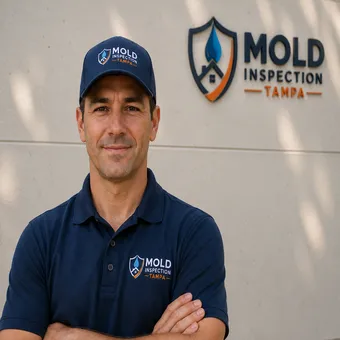
Michael Carter
Founder & Lead Mold Remediation Specialist
- 12+ years mold remediation experience
- IICRC-Certified Technician
- Florida Licensed & Fully Insured
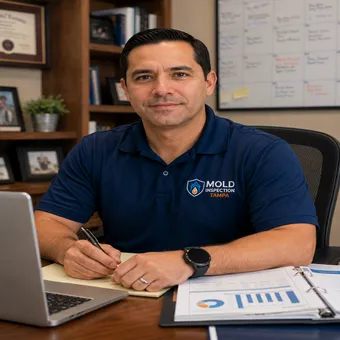
Daniel Rodriguez
Operations Manager
- Oversees all remediation projects
- IICRC-Certified
- EPA-Compliant Practices
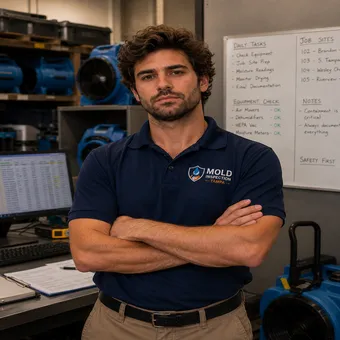
Ryan Mitchell
Senior Restoration Technician
- Specialist in containment & removal
- IICRC-Certified Technician
- EPA-Compliant Practices
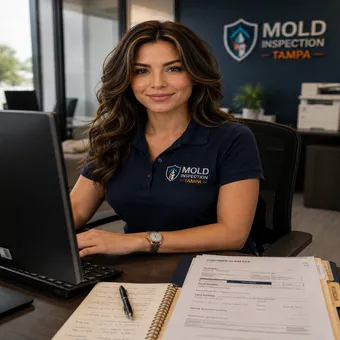
Jessica Adams
Customer Success Manager
- Single point of contact for all clients
- Insurance claim documentation support
- 12+ years customer service experience