If You're Smelling This, Read This First
A candle or an air freshener buys you an hour, maybe a day. If a smell keeps coming back no matter how much you clean, that's not a scent problem — it's a moisture problem wearing a smell as a symptom. Here's the quick version of what's actually going on and what to do about it:
Musty or earthy smell → almost always mold or mildew, usually from moisture that's been sitting somewhere for a while
Smell that's stronger after it rains or when the AC runs → likely tied to humidity or a condensation issue feeding it
Smell in one specific room or closet → points to a localized moisture source in that area, often behind a wall or under flooring
Smell that got noticeably worse after a leak or flood → water-damage odor, and if it's been more than a day or two, mold may already be starting
Whole-house staleness with no obvious source → often HVAC-related, or hidden moisture somewhere in the duct system
If any of this sounds familiar, skip to the section on what actually causes it, or call us for an assessment — the earlier you deal with the source, the cheaper and easier it is to fix.
Why Air Fresheners and Candles Don't Actually Work
This is worth explaining honestly, because it's the single biggest reason people end up calling a professional after months of frustration. Scented products work by adding a stronger smell on top of the odor, or in some cases by triggering a slight numbness in your sense of smell. Either way, they don't touch what's actually causing the odor. If the cause is moisture and microbial growth — which it is more often than people expect — the smell-causing compounds keep being produced the whole time you're masking them. That's why the smell always comes back, usually within hours, and often stronger, because whatever's causing it hasn't stopped growing.
Real odor removal works the opposite way: find the actual source, treat or remove it, and then neutralize what's left in the air and on surfaces. Masking is temporary by design. Source-based removal is permanent because there's nothing left producing the smell.
The Real Reason Mold and Mildew Smell 'Musty'
That distinctive musty smell isn't your imagination, and it isn't dirt — it's chemistry. As mold grows and breaks down organic material, it releases gases called microbial volatile organic compounds, or MVOCs. Those compounds are what your nose is actually detecting. This matters for one practical reason: you can smell mold long before you can see it. MVOCs travel through air gaps, wall cavities, and HVAC systems, which is exactly why a house can smell musty in a room where nobody can find a single visible spot of mold.
'My House Smells Musty but I Can't Find Any Mold' — Here's What's Happening
The mold is there, just not somewhere you'd think to look. Common hidden spots include behind drywall, under carpet padding, inside HVAC ductwork, in a clogged AC condensate drain line, and in crawl spaces. None of these are places a homeowner typically checks during a quick sniff-and-search.
It might not be a visible colony at all — yet. A colony can be small enough, or new enough, that it's producing MVOCs without being visually obvious. That doesn't mean it's not real; it means it's early.
It could be moisture without active mold, but still a mold-adjacent risk. Damp materials, condensation, and even excess dust in a humid room can carry a similar earthy smell through bacterial activity, even before mold has fully established itself.
Either way, the fix is the same: find where the moisture is, and address it.
If cleaning, ventilation, and time haven't made the smell go away, the source is almost certainly hidden behind a surface rather than sitting on one — and that's exactly the kind of problem a moisture inspection is built to find.
What Actually Causes Persistent Odors in Tampa Properties
Tampa's climate makes this list longer and more common here than in most parts of the country.
High humidity, year-round
Average relative humidity in Tampa runs around 74%, and anything above roughly 60% creates conditions where mold and bacteria multiply faster and odor compounds off-gas more easily.
Water damage, old or recent
Any leak, flood, or spill that wasn't fully dried leaves moisture in materials that keep producing odor long after the surface looks dry.
AC condensate line issues
A clogged drain line backs up and overflows, often into an attic or closet, creating a hidden, ongoing moisture source most people never think to check.
Older homes with aging construction
Neighborhoods like Ybor City, Hyde Park, Tampa Heights, and Seminole Heights have housing stock where original plumbing and less-sealed construction make trapped moisture more common.
Pet odors
Urine, especially, soaks into carpet padding and subflooring where surface cleaning never reaches it.
Poor ventilation
Bathrooms, closets, and laundry rooms with limited airflow trap humidity long enough for it to become a smell.
HVAC systems circulating the problem
Dirty coils, clogged filters, or moisture inside ductwork don't just fail to fix odor — they actively spread it through every vent in the property.
How We Remove Odors at the Source
Every job starts the same way: find what's actually causing it before doing anything else.
Assessment
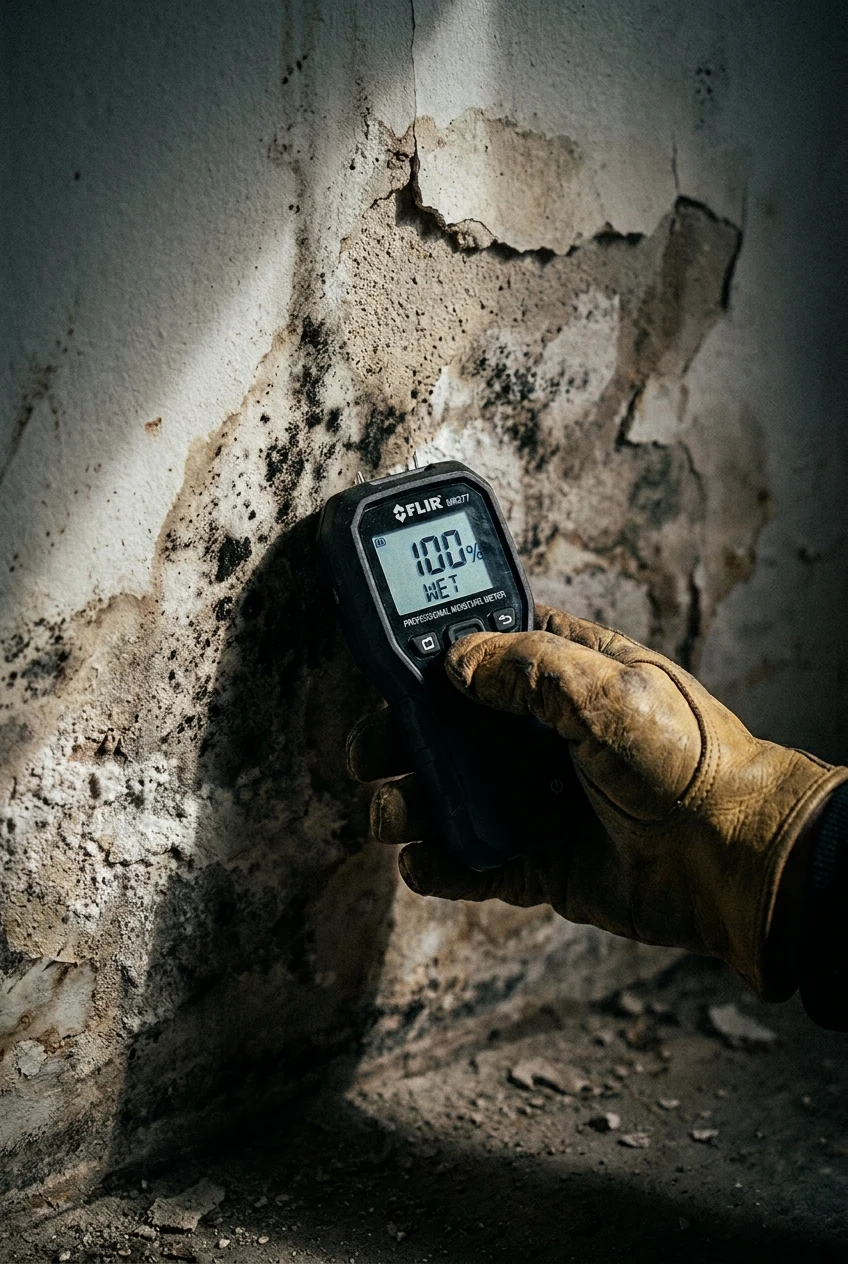
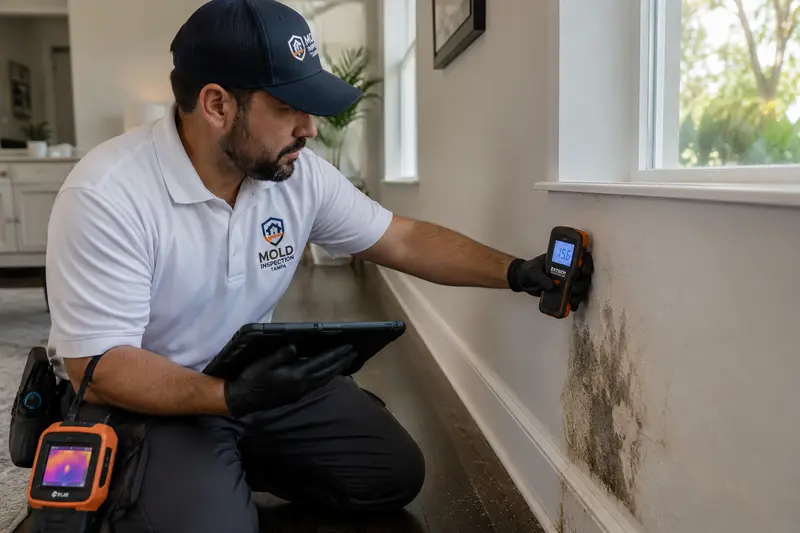
We inspect the property to identify the odor's source — checking common hidden spots first (HVAC, condensate lines, behind fixtures, under flooring) using moisture meters and, where needed, thermal imaging.
Source Correction
If moisture or mold is the cause, we address that directly. Odor treatment without fixing the underlying moisture is just an expensive version of an air freshener — it doesn't last.
Deep Cleaning & Treatment
Affected surfaces are cleaned and treated with antimicrobial solutions to eliminate the bacteria and mold producing the smell, not just cover it.
Odor Neutralization
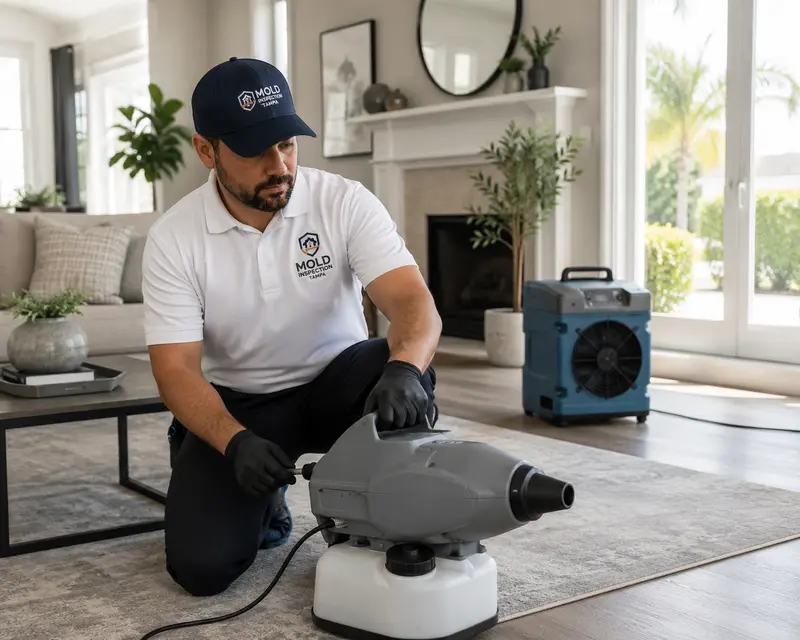
Depending on the situation, we use hydroxyl treatment, thermal fogging, or targeted air scrubbing to neutralize odor molecules that have settled into porous materials — fabric, carpet, drywall — that surface cleaning alone can't reach.
Verification
We don't consider the job done until the smell is actually gone, not temporarily masked. For occupied spaces, we prioritize treatments that don't require you to vacate the property or expose your family or pets to harsh chemicals.
Understanding Odor Treatment Options (and Why We Use What We Use)
Not all odor treatments are equal, and there's an honest tradeoff worth knowing about.
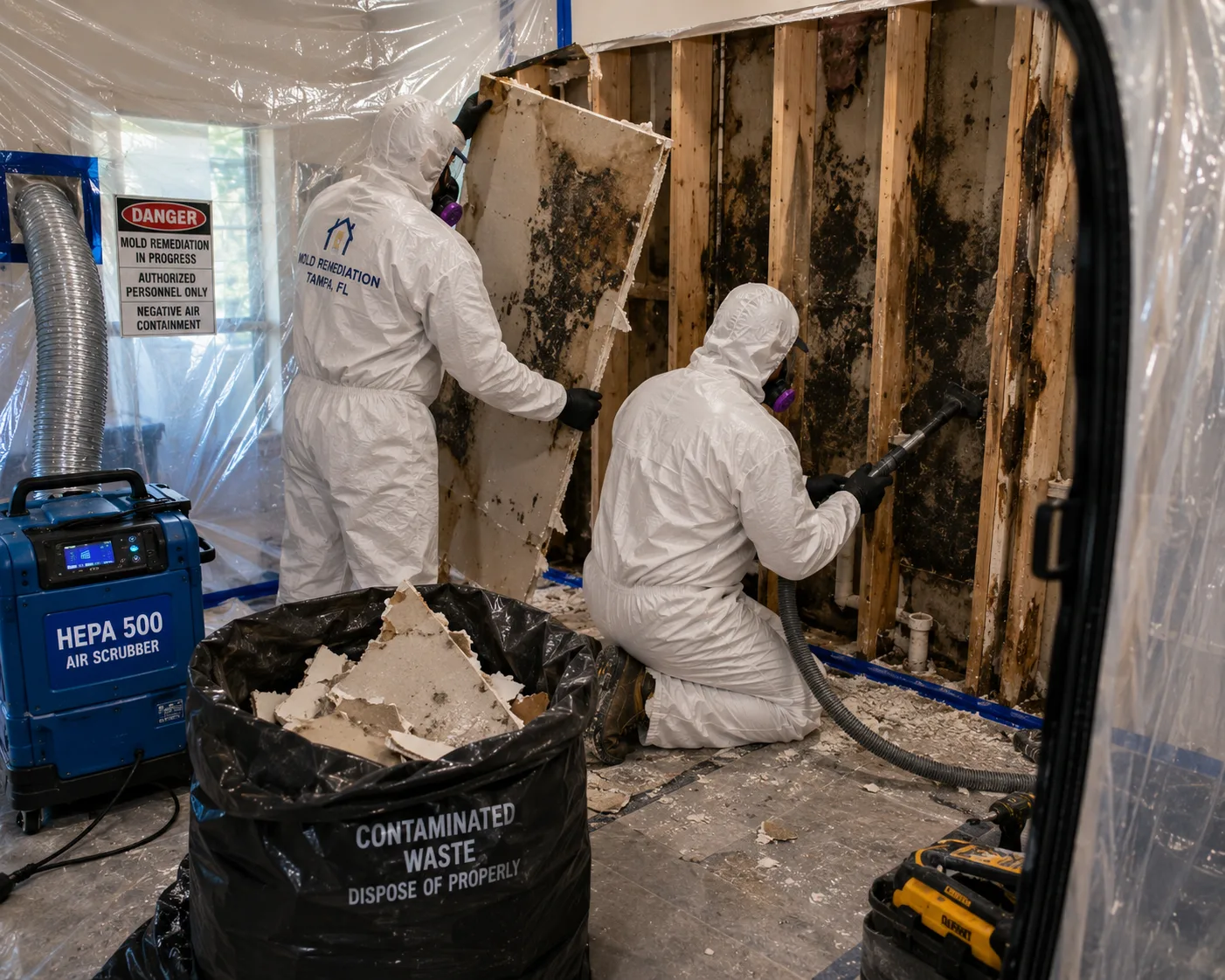
Ozone Treatment
Breaks down odor molecules fast and is effective on tough, deeply embedded smells.
The tradeoff: ozone is only safe to run in an unoccupied space, and the property needs to sit empty for a few hours afterward before it's safe to re-enter.
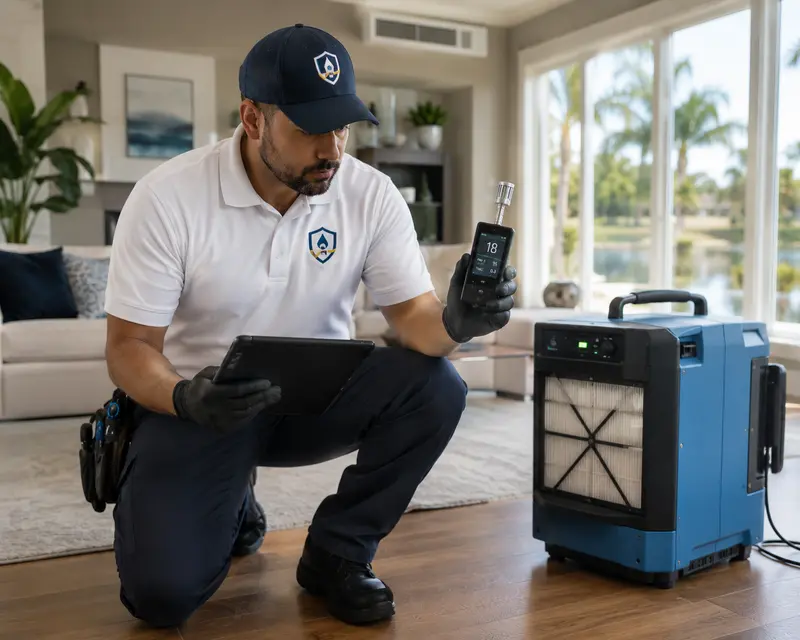
Hydroxyl Treatment
Works more gradually but has a real advantage: it's safe to run while the space is still occupied, with no evacuation required. For most residential mold and musty-odor jobs, this makes it the more practical choice.
Safe for occupied spaces — no evacuation required.
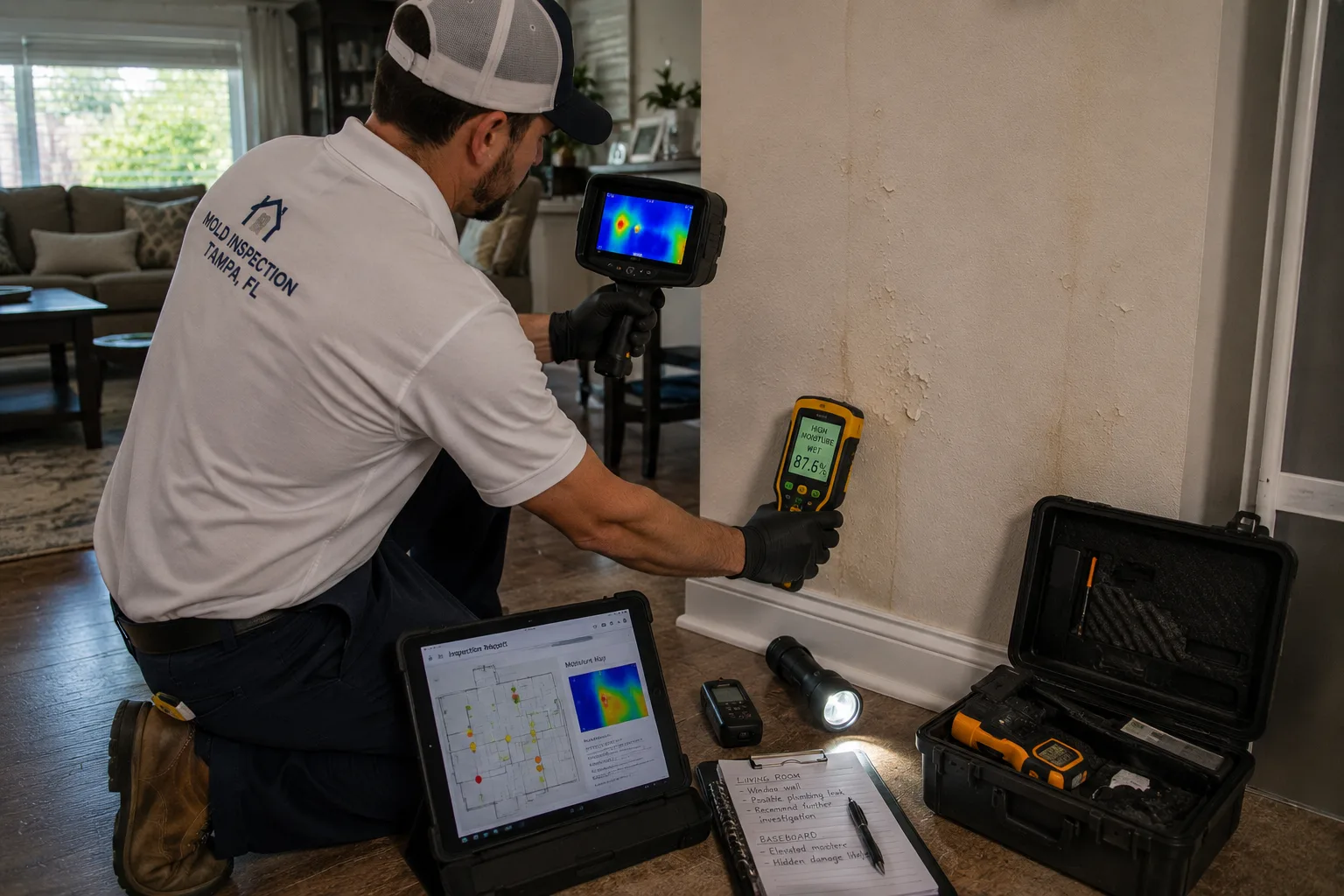
Thermal Fogging
Uses heat to carry a deodorizing agent into cracks, crevices, and porous materials that a simple spray or wipe-down can't reach — useful for odors that have penetrated deep into a material rather than just sitting on the surface.
Deep penetration for porous structural materials.
We choose the method based on your specific situation — how deep the odor has penetrated, whether the space needs to stay occupied, and what's actually causing it — rather than defaulting to one tool for every job.
Is It Actually Mold? A Quick Reality Check
Not every bad smell in a Tampa property is something we treat, and we'd rather tell you that upfront than take a job that isn't ours to fix.
Sulfur or rotten egg smell from tap water
That's usually not mold. It's typically related to your water heater, well water, or the city's water treatment process — a plumbing issue, not an odor-removal one. A plumber or water treatment specialist is the right call there.
Isolated trash or garbage smell
If the smell is isolated to a trash can, garbage area, or a single obviously-identifiable source, that's usually a cleaning issue rather than a structural one.
Musty, earthy, damp, or leak-related smell
That's squarely what we handle. When in doubt, a quick call can usually tell you which situation you're in before you spend money on the wrong fix.
Odors We Remove
We treat odors tied to moisture, mold, and everyday household causes:
Mold & Mildew Odor
the musty smell caused by active or past mold growth
Water Damage Odor
lingering smell from a leak, flood, or slow-drying materials
Damp & Musty Smells
general moisture-driven odor even without visible mold
Pet Odors
urine and dander that have soaked into carpet, padding, or upholstery
HVAC & Duct Odors
smells being circulated (and worsened) by your air system
General Household & Stale Odors
whole-house staleness from poor ventilation or trapped humidity
We serve both residential and commercial properties throughout Tampa.
Get a Free Odor Assessment
If a smell keeps coming back no matter what you try, it's telling you something a candle can't fix. Tampa's humidity means a small moisture problem rarely stays small for long. Our team will find the actual source, explain honestly what's causing it, and treat it properly — free to start, no pressure.
What to Expect
Meet Your Mold Specialists
Every black mold remediation project is handled directly by a licensed, certified professional — not an untrained subcontractor.
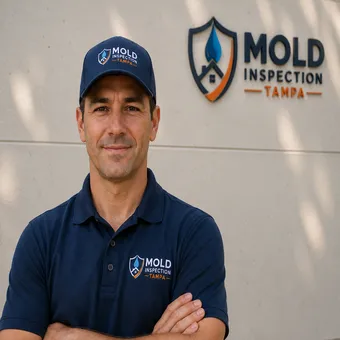
Michael Carter
Founder & Lead Mold Remediation Specialist
- 12+ years mold remediation experience
- IICRC-Certified Technician
- Florida Licensed & Fully Insured
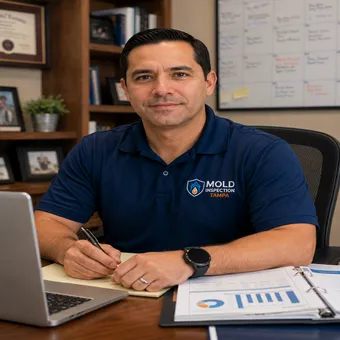
Daniel Rodriguez
Operations Manager
- Oversees all remediation projects
- IICRC-Certified
- EPA-Compliant Practices
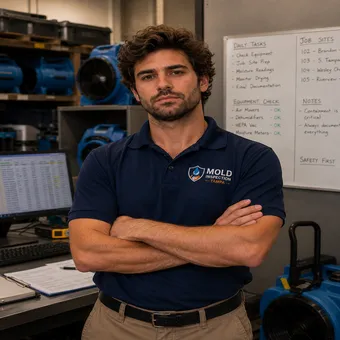
Ryan Mitchell
Senior Restoration Technician
- Specialist in containment & removal
- IICRC-Certified Technician
- EPA-Compliant Practices
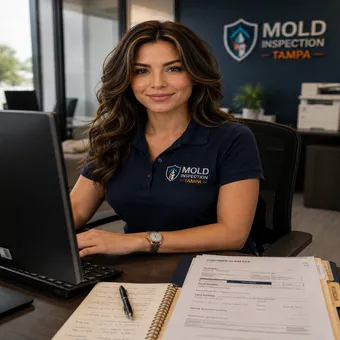
Jessica Adams
Customer Success Manager
- Single point of contact for all clients
- Insurance claim documentation support
- 12+ years customer service experience