What Is Black Mold, Really?
"Black mold" usually refers to Stachybotrys chartarum, a mold species that can produce mycotoxins — compounds linked to health effects in some people, especially with prolonged exposure. But here's the part most pages skip: not every black-colored mold is Stachybotrys, and Stachybotrys isn't always black — it can appear dark green or gray depending on conditions. Color alone can't tell you what you're dealing with; only lab testing can confirm the species.
EPA Takeaway
Here's the practical takeaway, straight from how the EPA actually recommends handling it: the containment and removal process is largely the same regardless of species. All mold growth should be treated as something to remove and the moisture source addressed — you don't need to win an argument about "is this the toxic kind" before taking action. If you're seeing dark, suspicious growth, treat it seriously and have it assessed.
Where Black Mold Commonly Grows in Tampa Homes
Stachybotrys and similar dark molds need two things to establish: a cellulose-rich food source (drywall, wood, paper-backed insulation, dust) and sustained high moisture — not just occasional dampness, but consistently wet conditions over time. That combination shows up in predictable places:
One detail worth knowing: Stachybotrys is actually a slower-growing species than many common molds — it typically takes 7 to 14 days of sustained moisture to establish a visible colony, versus 24 to 48 hours for some faster-growing species. That's part of why it often shows up alongside other mold that arrived first, in places where moisture has been present a while, not from a one-time event.
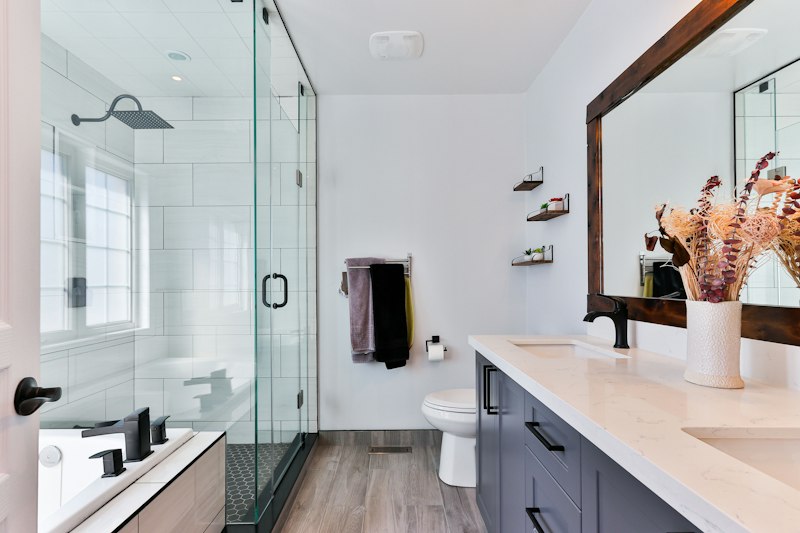
Bathrooms
Grout lines, behind tile, under vanities, and around poorly-ventilated shower areas.
Behind Walls
Where a slow leak, roof intrusion, or AC condensation line has been feeding moisture unnoticed.
Attics
Roof leaks and inadequate ventilation combined with Tampa's heat.
Crawl Spaces & Subfloors
Tampa's high water table and ground moisture create ongoing dampness.
Kitchens
Under sinks, behind refrigerators, and around dishwasher connections.
HVAC Systems & Ductwork
Condensation and clogged drain lines create hidden, ongoing moisture that spreads spores through every room the system serves when it runs.
Signs You May Have Black Mold
Don't try to clean it yourself. Disturbing a colony — scrubbing, spraying, even vacuuming — can release spores into the air and spread contamination to rooms that weren't affected before. If you suspect black mold, have it assessed by a professional before touching it.
These aren't definitive proof — they're signals worth taking seriously. Only a professional assessment can confirm what you're dealing with.
Dark patches — black, dark green, or gray growth on walls, ceilings, or grout, especially in bathrooms and kitchens.
A musty, earthy odor — that persists despite cleaning, particularly in poorly-ventilated rooms.
Water stains or discoloration — yellowish or brownish staining that suggests past or ongoing moisture.
Warped, bubbling, or soft drywall — a sign moisture has been trapped behind the surface for a while.
Recent water damage — any leak, flood, or AC issue in the past several months, even if it looked minor at the time.
Symptoms that ease when you're away from the property — and return when you're back — worth mentioning to your doctor, not something to self-diagnose.
Health Considerations — What's Actually Established
We'd rather give you the accurate picture than the scariest one. Mold exposure affects people differently, and according to the CDC, no test currently proves a direct link between Stachybotrys chartarum specifically and particular health symptoms — the science here is genuinely more nuanced than a lot of marketing content suggests.
What Is Well-Established
Mold in a building should be removed regardless of species, because mold exposure in general is associated with respiratory irritation, allergic reactions, and worsened symptoms for people with asthma or existing sensitivities. People with compromised immune systems, young children, and older adults are generally considered more at risk from mold exposure of any kind.
Vulnerable Populations Most Affected
If you or someone in your home has ongoing symptoms you think may be related to mold, that's a conversation for your doctor — we're not able to diagnose a health condition, and no legitimate mold removal company can. What we can do is confirm whether there's an active mold problem, remove it properly, and address the moisture causing it.
Why Fast Action Matters in Tampa
Tampa's climate works against you here. Average humidity sits around 74% year-round, and combined with frequent heavy rain and hurricane season, moisture events are common — burst pipes, roof leaks, AC condensation issues, and post-storm flooding all create the sustained dampness mold needs.
Because mold can begin developing within 24 to 48 hours of a moisture event, and because the colony keeps growing and spreading spores the longer it's left alone, waiting rarely makes the situation simpler. What starts as a manageable, contained area can spread into a larger one — behind more wall space, into insulation, along more ductwork — the longer the moisture source goes unaddressed.
Our Black Mold Remediation Approach
We follow the same rigorous standard for black mold as any other severe fungal growth — because while Stachybotrys gets the most attention, the safe removal process doesn't fundamentally change based on species. Here's the short version:
Assessment
Assessment — identifying the extent of growth and, critically, the moisture source feeding it.
Containment
Containment — sealing off the work area so removal doesn't spread spores to clean parts of your home.
Safe Removal
Safe removal — of contaminated materials, following EPA-aligned protocols.
Drying & Moisture
Drying and moisture correction — addressing the actual cause, not just the visible symptom.
Verification
Verification — confirming the area is clear before we call the job done.
Need Comprehensive Water Damage Cleanup?
For the full detail on our step-by-step process, see our Mold Remediation & Removal page → — this page focuses specifically on black mold identification and what you need to know before that process starts.
Clearance testing is performed by accredited third-party laboratories to guarantee uncompromised objectivity.
Residential & Commercial Black Mold Removal

Homeowners & Renters
Residential Black Mold Removal
We handle black mold in homes, condos, and rental properties.
Business & Property Managers
Commercial Black Mold Remediation
Offices, retail spaces, and multi-unit buildings. Commercial properties often need faster turnaround to limit disruption, and larger buildings may involve more extensive HVAC-related contamination that needs a broader assessment.
Not sure which applies to your situation? (813) 555-2748 — we'll point you in the right direction.
Preventing Black Mold From Returning
The single biggest reason black mold comes back after removal is that the moisture source was never fixed — removing the mold without correcting what caused it just resets the clock. A few practical habits help:

Fix leaks promptly — plumbing, roof, or AC condensation issues, even small ones.
Keep bathroom and kitchen ventilation running — during and after showers or cooking.
Check AC condensate lines periodically — clogs are a common, easy-to-miss moisture source in Tampa homes.
Watch humidity levels — keeping indoor humidity in the 30–50% range makes it much harder for mold to establish.
Address water damage immediately, even if it seems minor — Tampa's climate doesn't give damp materials much time before mold becomes a real possibility.
Does Insurance Cover Black Mold Removal in Florida?
Many Florida homeowner's insurance policies cover mold remediation when it results from a sudden, covered event — a burst pipe or storm-related roof leak, for example. Mold from long-term neglect or unaddressed maintenance issues is typically excluded. Because the cause matters so much for coverage, thorough documentation from the start makes a real difference in how smoothly a claim goes.
We document everything from the first visit. Thorough documentation of the cause matters significantly for how a claim gets handled — we make sure you have what you need from day one.
Coverage at a Glance
- Burst pipe flooding
- Storm-related roof leak
- Sudden appliance overflow
- Hurricane water intrusion
- Long-term neglect
- Unaddressed maintenance issues
- Slow leaks ignored over time
- Gradual moisture buildup
Serving Tampa &
Surrounding Neighborhoods
We provide black mold removal throughout Tampa, including South Tampa, Davis Islands, Ybor City, Hyde Park, and Seminole Heights — plus Downtown, Channel District, Westshore, New Tampa, and nearby areas. Older neighborhoods with aging plumbing tend to see black mold paired with the kind of slow, hidden leaks that go unnoticed longest.
served 24/7 Emergency
response
Get a Free Black Mold Inspection
Not sure if what you're seeing is black mold? Don't guess, and don't disturb it trying to find out yourself. Our licensed Tampa team will assess it honestly, tell you what we find, and explain what — if anything — needs to happen next.
What to Expect
Meet Your Mold Specialists
Every black mold remediation project is handled directly by a licensed, certified professional — not an untrained subcontractor.
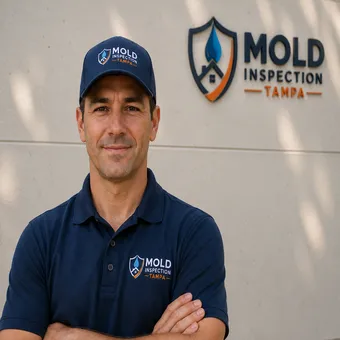
Michael Carter
Founder & Lead Mold Remediation Specialist
- 12+ years mold remediation experience
- IICRC-Certified Technician
- Florida Licensed & Fully Insured
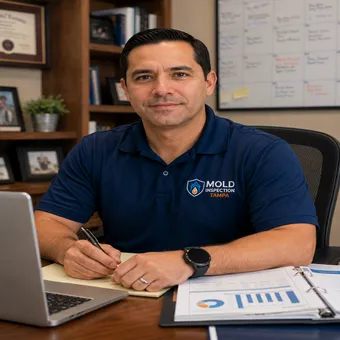
Daniel Rodriguez
Operations Manager
- Oversees all remediation projects
- IICRC-Certified
- EPA-Compliant Practices
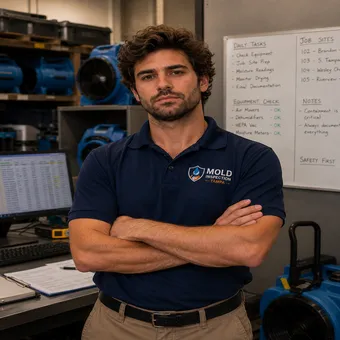
Ryan Mitchell
Senior Restoration Technician
- Specialist in containment & removal
- IICRC-Certified Technician
- EPA-Compliant Practices

Jessica Adams
Customer Success Manager
- Single point of contact for all clients
- Insurance claim documentation support
- 12+ years customer service experience