Why Davis Islands Is Genuinely Different — Not Just Another Waterfront Neighborhood
Every waterfront community in Tampa deals with humidity. Davis Islands deals with something more specific than that, and it starts with the ground itself.
Davis Islands isn't naturally-occurring land. In the 1920s, developer D.P. Davis dredged sand and mud up from the bottom of Hillsborough Bay and used it to build up two small natural islands — originally called Little Grassy Key and Big Grassy Key — into the residential archipelago that exists today. Every home here sits on fill material dredged from the bay floor, not on natural, undisturbed terrain. That matters for moisture in a way that's easy to overlook: fill land behaves differently than natural ground when it comes to water retention, settling, and how close the water table sits to the surface. Combine that with an island that's surrounded by water on nearly every side, and you have a foundation environment that's structurally different from anywhere else in South Tampa.
Then there's the water exposure itself. With an estimated 35-40% of homes directly bordering a canal or Hillsborough Bay, Davis Islands has one of the highest concentrations of true waterfront property in the entire Tampa area — not 'near the water,' but adjacent to it, with docks, seawalls, and direct bay access as standard features rather than exceptions.
The Architecture Adds Its Own Risk Factor
Most Davis Islands homes reflect the neighborhood's original 1920s-1930s development: Mediterranean Revival architecture, with stucco exteriors, red tile roofs, and arched windows. Much of this housing stock falls within the Davis Islands Local Historic District, which means many owners are preserving original construction rather than fully modernizing it.
That's part of the neighborhood's charm — and part of what makes moisture management here different from a typical Florida home. Stucco, while durable, can trap moisture behind it if cracks or gaps develop, hiding water intrusion for a long time before any visible sign appears inside. Red tile roofing systems have their own maintenance patterns distinct from asphalt shingle roofs common elsewhere in Tampa. And because historic district guidelines can affect what modifications are allowed, addressing moisture issues on a Davis Islands property sometimes takes a more careful approach than a straightforward tear-out-and-replace job elsewhere.
Real Flood Risk, Not a Hypothetical
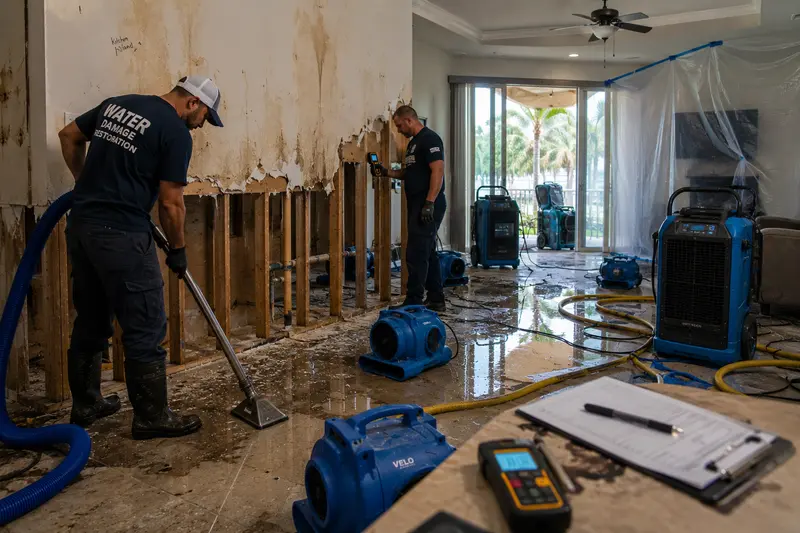
This isn't a theoretical concern for Davis Islands — it has real, documented history. When Tropical Storm Eta affected the Tampa Bay area in 2020, flooding on Davis Islands was concentrated on waterfront properties and the island's northern tip, according to Tampa Bay Times flood-modeling analysis. It's a pattern specific to the island's geography: the lowest-lying, most water-adjacent homes see it first.
Longer-term, the outlook matters too. The same analysis modeled that continued sea-level rise over the coming decades could mean a storm of similar strength eventually covering nearly the entire island in at least a foot of water — not just the waterfront edge. Whether or not that timeline plays out exactly as modeled, it reflects a real, ongoing conversation among Davis Islands homeowners, the same conversation you'll hear about seawalls, elevation, and flood preparedness at any neighborhood gathering here.
For mold specifically, this matters because storm-related flooding and moisture intrusion is one of the fastest paths to a serious mold problem — and on an island where evacuation and post-storm access can be more complicated than on the mainland, delays in addressing water damage tend to be longer here than in more accessible parts of Tampa.
Where We Typically Find Mold on Davis Islands
Based on the island's construction era, materials, and water exposure:
Behind stucco walls
cracks or failed sealant let moisture in gradually, often invisible from inside until it's substantial
Around dock-adjacent and seawall-facing rooms
the rooms closest to the water see the most humidity exposure and splash/spray during storms
Ground-floor areas of homes not elevated above base flood elevation
older construction that predates current elevation requirements
Attics under original red tile roofing
aging underlayment and flashing on decades-old tile roofs
HVAC systems working overtime
waterfront humidity means air conditioning runs harder and longer, and condensation issues in ductwork are common
Boat houses, docks, and ground-level storage
structures built for water access that see near-constant moisture exposure
Our Mold Remediation Services on Davis Islands
Whether you're in a 1920s Mediterranean Revival home or a newer waterfront build, we apply the same licensed process — adapted to what island properties actually need.
Inspection & Assessment
We check the areas that matter most here — behind stucco, around window and door seals, and near any recent water exposure — using moisture meters and thermal imaging to find what isn't visible on the surface.
Containment
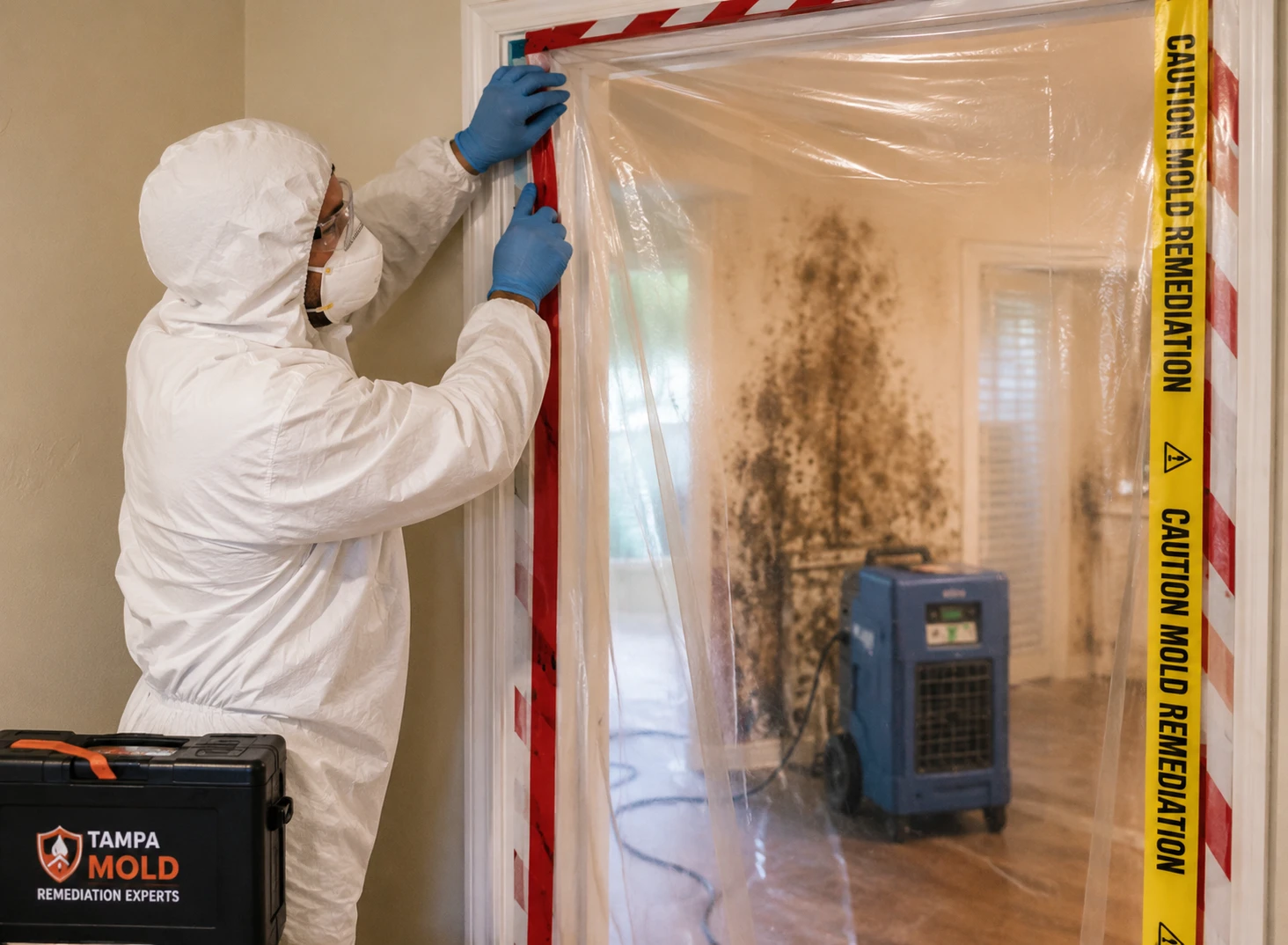
We seal off the affected area to prevent spores from spreading, which matters as much in an open waterfront floor plan as it does in a tighter historic layout.
Removal & Treatment
Contaminated materials are safely removed and surfaces treated with antimicrobial solutions, following the same protocol regardless of species — because the process doesn't change based on what type of mold is present.
Moisture Source Correction
We identify what's actually feeding the mold — stucco cracks, a failed seal, storm-related intrusion, or an HVAC condensation issue — because removing the mold without fixing the cause just means it returns.
Verification
We confirm the area is genuinely clear before calling the job complete.
For full technical detail on our process and equipment, see our mold remediation & removal page — this page focuses on what's specific to Davis Islands properties.
Our Services for Davis Islands Properties
Mold Inspection & Testing
Identifying hidden moisture behind stucco and around waterfront-facing rooms
Learn more →Black Mold Removal
Safe removal from historic and waterfront island homes
Learn more →Water Damage Restoration
Response to storm surge and flooding along canal-front and bay-adjacent properties
Learn more →Water Extraction & Mitigation
Fast water removal after tropical storm and hurricane events
Learn more →Odor Removal
Addressing musty odors common in waterfront, humidity-heavy properties
Learn more →Air Quality & Purification
Post-remediation air scrubbing for homes running HVAC harder due to island humidity
Learn more →Residential & Waterfront Commercial Properties
Davis Islands is predominantly residential, but the island also includes Tampa General Hospital, marina-adjacent commercial space, and businesses near the island's retail strip. We handle both residential mold jobs — often tied to the island's age, construction, or a specific storm event — and commercial properties where fast response matters for continuity of operations.

Get a Free Inspection on Davis Islands
If you own property on Davis Islands — especially a waterfront home, a stucco-exterior original, or anything near the canal or bay — a free inspection tells you where you actually stand. We know what to look for here, and we'll tell you honestly what we find.
Why Davis Islands Trusts Us
Meet Your Mold Specialists
Every black mold remediation project is handled directly by a licensed, certified professional — not an untrained subcontractor.
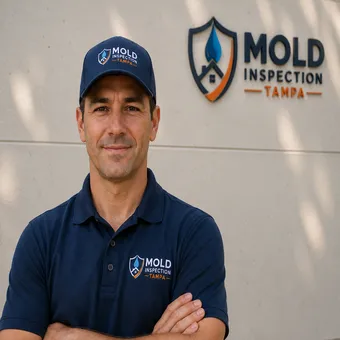
Michael Carter
Founder & Lead Mold Remediation Specialist
- 12+ years mold remediation experience
- IICRC-Certified Technician
- Florida Licensed & Fully Insured
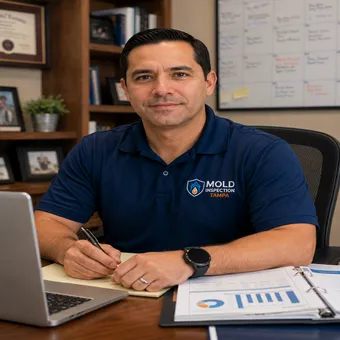
Daniel Rodriguez
Operations Manager
- Oversees all remediation projects
- IICRC-Certified
- EPA-Compliant Practices
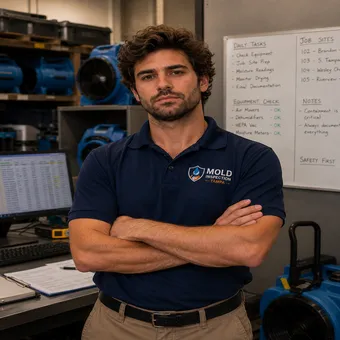
Ryan Mitchell
Senior Restoration Technician
- Specialist in containment & removal
- IICRC-Certified Technician
- EPA-Compliant Practices
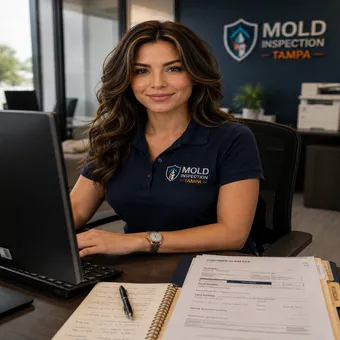
Jessica Adams
Customer Success Manager
- Single point of contact for all clients
- Insurance claim documentation support
- 12+ years customer service experience