FL Licensed Mold Remediator | License #: MRSR-45871 Emergency 24/7 Hotline: (813) 555-2748
MOLD INSPECTION & TESTING — TAMPA, FL

Mold Inspection & Testing in Tampa, FL

A mold inspection finds where mold is growing and why; mold testing confirms the type and how much is in your air. In Tampa's humid climate, both matter. We offer a free visual mold inspection for Tampa homes and businesses, plus certified lab testing when you need proof — with clear reports and honest next steps.

Licensed & Insured IICRC-Certified Certified Lab Analysis Same-Day Appointments Available Serving All of Tampa

Book Free Inspection

Respond within 60 minutes. No obligation.

Free inspection · No obligation · Licensed & insured

UNDERSTANDING THE DIFFERENCE

Mold Inspection vs. Mold Testing: What's the Difference?

Mold Inspection

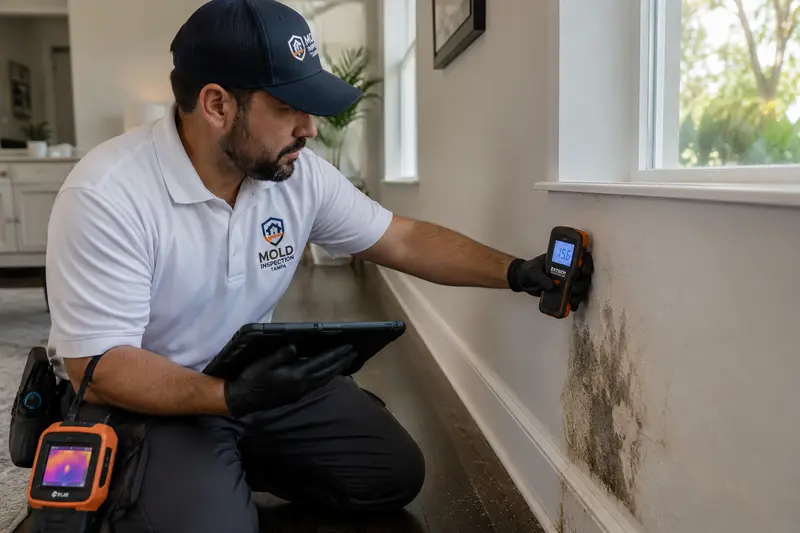
A mold inspection is a visual assessment. An inspector examines your property for visible mold and the moisture problems that cause it. The core tool is simple: a bright flashlight, plus moisture meters and thermal imaging to spot hidden dampness.

Answers: Is there visible mold, and where is the moisture coming from?

Mold Testing

Mold testing is sample collection sent to a lab. Testing uses air-cassette samples or physical swab samples that go to an independent laboratory. Officially, mold can't be confirmed as mold until a lab verifies the sample.

Answers: What type of mold is this, and how many spores are in the air?

The Part Most Companies Won't Explain

A proper mold test always includes an outdoor control sample. Mold exists everywhere — outside your home right now, in normal amounts. So a real test collects at least three samples: one outdoors as a baseline, and two or more indoors.

If your indoor spore counts are significantly higher than the outdoor baseline, that points to a mold colony growing inside. Without that outdoor control, an indoor "positive" result means almost nothing — because everything tests positive for some mold.

When Do You Need Testing, Not Just an Inspection?
Mold is hidden — you smell it but can't find it
You need to identify the exact species
Real estate transaction — buyer or seller protection
Insurance claim documentation required
Post-remediation verification — confirm cleanup worked
Mold inspector checking wall moisture in Tampa home
24–48
Hours
Mold starts growing after water exposure
RECOGNIZE THE SIGNS

Signs You Need a Mold Inspection in Tampa

Mold doesn't always show itself. In Tampa's climate it often grows behind walls, under flooring, or inside your HVAC system before you ever see a spot. Call for an inspection if you notice any of these:

A musty, earthy smell that lingers — often the very first sign of hidden mold
Visible spots or discoloration on walls, ceilings, grout, or baseboards
Recent water damage, a roof or plumbing leak, or flooding — even if the surface looks dry now
Peeling paint, bubbling drywall, or warped flooring from trapped moisture
Allergy or respiratory symptoms that ease when you leave the house
Condensation on windows, walls, or around AC vents
You're buying, selling, or leasing a property and want to know before you sign
You just had remediation done and want to confirm it worked
LOCAL EXPERTISE

Why Tampa Homes Are So Prone to Mold

Tampa sits in one of the most mold-prone regions in the country, and the reason is the climate. Average relative humidity here stays around 74% year-round — among the highest in the continental US — and the city gets over 50 inches of rain a year, most of it packed into the June-through-September wet season. Multiple industry studies have ranked Tampa among the top US cities most vulnerable to mold.

Add hurricane season on top of that. After a storm, standing water and roof or window intrusion can start mold growth within 24 to 48 hours. And Tampa's mix of older homes — especially in neighborhoods like Ybor City, Hyde Park, and Seminole Heights — brings aging plumbing and construction that trap moisture.

Even brand-new homes aren't safe: a single unnoticed AC condensation leak in this climate can feed a mold colony in days. That's why a professional inspection matters here more than in drier parts of the country. Local conditions are working against your home year-round.

74%
Avg. Humidity
Year-round — among highest in US
50+"
Inches of Rain
Annual rainfall in Tampa
24hrs
Mold Starts
After water exposure in this climate
#1
Mold Risk City
Ranked top US city for mold risk

What Happens If You Ignore It

Mold doesn't pause while you decide what to do. Because it can double quickly in Tampa's humidity, a small, cheap-to-fix problem can turn into a major one fast. Left alone, mold spreads into drywall, insulation, and framing — turning a simple cleanup into a demolition-and-rebuild job.

It can damage your home's structure, hurt its resale value, and contribute to ongoing allergy and respiratory symptoms for the people living there. Catching it early, while it's still contained, is always cheaper and easier than waiting.

Call Now — Catch It Early: (813) 555-2748
HOW IT WORKS

Our Mold Inspection & Testing Process

We keep it straightforward, and we explain each step as we go.

1

Schedule Your Inspection

Call or book online. For urgent situations — active leaks, post-storm flooding — we offer same-day appointments when available.

2

Free Visual Inspection

An inspector examines your property with a bright flashlight, moisture meters (both pin-type and non-invasive), and thermal imaging cameras. The infrared camera reveals moisture behind walls and ceilings that the naked eye can't see.

3

Testing & Sample Collection (If Needed)

If testing is warranted, we collect air-cassette and surface-swab samples — including an outdoor control sample — following proper methodology.

4

Independent Lab Analysis

Samples go to a certified third-party laboratory that identifies the mold species and measures spore counts against your outdoor baseline.

5

Clear Written Report

You get a detailed report with photos, findings, and lab results explained in plain language — not jargon. Lab results typically come back within 24 to 48 hours.

6

Honest Next Steps

We tell you what the results actually mean and what (if anything) needs to happen — including whether professional remediation is genuinely necessary. No upselling, just honest answers.

EXPERT INSIGHT

How a Professional Actually Finds Hidden Mold

Finding mold isn't just walking around looking for black spots. Experienced inspectors look for moisture first — because moisture is what turns harmless settled spores into an active colony.

Here's a detail most homeowners never hear: mold usually colonizes on household dust first. Dust is made of tiny broken bits of building materials and skin cells — essentially pre-made food for mold. Add humidity forming tiny water droplets on a dusty surface, and you have everything a colony needs: moisture, food, and the right temperature.

That's why a trained inspector uses a high-powered flashlight held at an angle to tell the difference between ordinary dust and early colonization. Colonization looks less even, less uniform than the fine, evenly-settled dust you'd expect. Common hidden spots include inside and underneath drawers, along the tops of cabinet doors, and behind furniture.

The Healthy-Home Rule

The rule inspectors live by is simple: clean and dry. Not just dry — clean and dry.

Tools Our Inspectors Use

High-Powered Flashlight

Held at an angle to reveal colonization vs. ordinary dust — a technique that takes experience to read correctly.

Pin-Type & Non-Invasive Moisture Meters

Measure moisture inside walls, floors, and ceilings — both with and without penetrating the surface.

Thermal Imaging Camera

Reveals temperature differences that indicate moisture behind walls and ceilings — invisible to the naked eye.

Air Cassette Samplers

Calibrated equipment that captures air samples — always including an outdoor control — for certified lab analysis.

TRANSPARENCY FIRST

The "Conflict of Interest" Question — Answered Honestly

If you've researched mold companies, you've probably seen the advice: "Don't hire a company that does both the testing and the removal — it's a conflict of interest." It's a fair concern, and it's worth understanding.

The worry is real: if a company gets paid more for finding more mold, it has an incentive to overstate the problem. Florida law takes this seriously. Under Florida Statute 468.8419, a licensed mold assessor generally cannot perform the remediation on the same property they assessed within 12 months — the state deliberately separates the two roles to protect homeowners.

So How Do We Handle It?

We're upfront about the fact that we offer both inspection and remediation. When you have visible mold and clearly need it removed, a formal paid lab assessment often isn't even necessary — you need the problem fixed.

When lab testing is the right call, we explain exactly why, show you the results against your outdoor control sample, and let the lab data — not a sales pitch — decide what happens next. If testing shows your home is fine, we tell you it's fine.

"We'd rather earn your trust by explaining this openly than pretend the question doesn't exist."

THE TRUTH ABOUT DIY KITS

Why a Professional Test Beats a DIY Kit

DIY Petri-Dish Kits

Will almost always show something — mold is everywhere in Florida air
No outdoor control sample — so "positive" results mean almost nothing
Not accepted by insurance companies or in legal disputes
Doesn't identify species or spore counts accurately

Professional Lab Testing

Calibrated air-sampling equipment — accurate spore counts
Always includes outdoor control sample — meaningful comparison
Accredited lab results — valid for insurance claims and legal disputes
Identifies exact mold species and spore levels vs outdoor baseline
INSURANCE COVERAGE

Does Insurance Cover Mold Testing in Florida?

Sometimes — it depends on the cause. If your mold resulted from a sudden, covered event like a burst pipe or an appliance overflow, your homeowners policy may cover testing and remediation. Mold that developed slowly from long-term humidity or unaddressed maintenance is usually excluded.

Because the cause is everything, documentation matters: a proper inspection with lab results and moisture readings gives your insurer the evidence they need. We document thoroughly and can help you understand what your specific situation calls for.

Call (813) 555-2748 — We'll Help

Sudden Events — Often Covered

Burst pipe, appliance overflow, storm intrusion — sudden covered events typically qualify.

Gradual Moisture — Usually Excluded

Long-term humidity, poor ventilation, or unaddressed maintenance is typically not covered.

Documentation Is Everything

We provide lab results, moisture readings, and thorough documentation your insurer needs to process your claim.

WHERE WE WORK

Serving Tampa & Surrounding Neighborhoods

We provide mold inspection and testing throughout Tampa, including South Tampa, Davis Islands, Ybor City, Hyde Park, and Seminole Heights — plus Downtown, Channel District, Westshore, New Tampa, and nearby areas. Each has its own moisture challenges, from waterfront humidity on Davis Islands to aging construction in the historic districts.

South Tampa Davis Islands Ybor City Hyde Park Seminole Heights
FREE INSPECTION

Book Your Free Mold Inspection Today

Worried about a musty smell, a past leak, or symptoms you can't explain? Don't guess, and don't rely on a $15 petri dish. In Tampa's humid, storm-prone climate, catching mold early genuinely saves money and stress. Our licensed local team will inspect your property, explain what we find, and give you honest recommendations — free to start, with no pressure.

Call Now: (813) 555-2748 Book Your Free Inspection →
YOUR INSPECTOR

Meet Your Mold Inspector

Every inspection is performed by a licensed, certified professional — not an untrained subcontractor. Here's who you'll be working with.
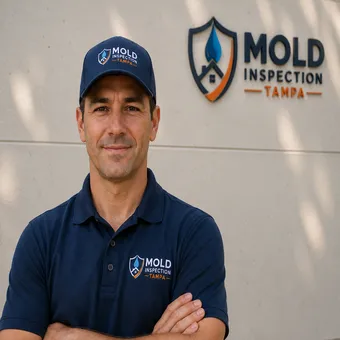
Michael Carter — Lead Mold Inspection Specialist

Michael Carter

Founder & Lead Specialist
12+ years mold remediation experience IICRC-Certified Florida Licensed & Insured
Ryan Mitchell — Senior Restoration Technician

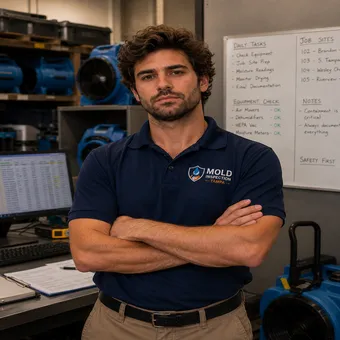
Ryan Mitchell

Senior Restoration Technician

Specialist in containment & removal IICRC-Certified EPA-Compliant Practices
CUSTOMER REVIEWS

What Our Tampa Customers Say

★★★★★ 4.9 Stars · 2,000+ Tampa Reviews
"

Found mold behind our bathroom wall that we never would have found ourselves. The thermal imaging made all the difference. Professional, thorough, and honest about what we actually needed.

S
Sarah M.
South Tampa
★★★★★
"

After hurricane damage, called these guys first. Same-day inspection, detailed report, and they helped us document everything for the insurance claim. Lifesavers.

D
David R.
Hyde Park
★★★★★
"

Bought an older home in Ybor City and wanted a full mold inspection before closing. Clear report, explained everything, and no pressure to do more than was needed. Highly recommend.

A
Amanda T.
Ybor City
★★★★★
FAQ

Frequently Asked Questions

What's the difference between a mold inspection and mold testing?

A mold inspection is a visual assessment — an inspector looks for visible mold and the moisture causing it, using a flashlight, moisture meters, and thermal imaging. Mold testing goes further: it collects air or surface samples that a lab analyzes to identify the mold species and spore levels. The two are often done together. The simplest way to think about it: inspection tells you where and why, while testing tells you what and how much. A proper test also includes an outdoor control sample so your indoor levels can be measured against a real baseline.

How much does mold testing cost in Tampa?

Mold testing in Tampa typically ranges from about $300 to $650 for a standard inspection with lab-analyzed samples, though larger properties or additional samples can push costs higher — some quotes reach $700 to $1,000 for multiple samples in bigger spaces. Pricing depends on property size, the number of samples collected, and whether you need air testing, surface testing, or both. We give you clear, upfront pricing before any work begins, with no hidden fees. For visible mold that obviously needs removal, testing isn't always necessary — we'll tell you honestly if you can skip it.

Do I really need a mold test if I can already see mold?

Often, no. If you can clearly see a significant patch of mold, testing may not tell you anything you don't already know — you need it removed, not confirmed. Testing is most useful when mold is hidden, when you need to identify the exact species, when an insurance claim or real estate deal is involved, or to verify that a cleanup actually worked. An honest company will tell you when a test is unnecessary rather than selling you one anyway. We'd rather save you money on a test you don't need and focus on solving the actual problem.

Are DIY mold test kits accurate?

Not really. The petri-dish kits sold at home stores will grow mold in almost any Florida home, because mold spores are everywhere in normal air. A dish that grows something doesn't tell you whether your indoor air is actually worse than the outdoor baseline — which is the only measurement that matters. Professional testing uses calibrated air-sampling equipment, always includes an outdoor control sample, and sends results to an accredited lab. That's what produces meaningful, defensible results — and unlike a DIY kit, professional lab documentation holds up for insurance claims and disputes.

How long does a mold inspection take, and when do I get results?

A typical residential mold inspection takes about one to two hours, depending on the size of your property and how many areas need checking. If we collect samples for lab testing, results usually come back within 24 to 48 hours. You'll receive a written report with photos, findings, and lab data explained in plain language — plus clear recommendations on what, if anything, needs to happen next. For urgent situations like active leaks or post-storm flooding, we offer same-day inspection appointments whenever possible.

Can the same company do my inspection and my mold removal?

Yes, we handle both — and we're upfront about it. Florida law (Statute 468.8419) separates the roles of licensed mold assessor and remediator to prevent a conflict of interest. When you have visible mold that clearly needs removal, a formal paid assessment often isn't required at all. When lab testing is genuinely warranted, we let the results speak for themselves. Our reports reflect what's actually there — honest findings are what keep our customers coming back.

How fast can mold grow after water damage?

Mold can begin growing within 24 to 48 hours of water exposure — and in Tampa's heat and humidity, it often moves fast. That's why acting quickly after any leak, flood, or storm matters so much. Even if you dry the surface, moisture trapped inside baseboards, drywall, and subflooring can feed hidden mold for weeks. After Tampa's hurricanes, this is one of the most common problems homeowners face. If you've had recent water intrusion, a prompt inspection can catch a problem while it's still small and inexpensive to fix.

What causes mold in Tampa homes specifically?

Tampa's mold problems come mainly from its climate: year-round humidity around 74%, heavy summer rainfall, and frequent storms that drive water into homes. Common triggers include AC condensation leaks, roof leaks, plumbing failures, and post-hurricane flooding. Older neighborhoods with aging plumbing — like Ybor City, Hyde Park, and Seminole Heights — are especially prone. Mold also tends to start on household dust in cooler, less-cleaned spots like behind furniture and inside cabinets. Controlling indoor moisture — running your AC, fixing leaks quickly, and managing humidity — is the single most effective way to prevent it.

Tampa's Trusted Mold Inspection Team

Ready When You Are

Whether you've spotted mold, smelled something musty, or just want peace of mind before buying a home, our licensed Tampa team is here to help. Start with a free inspection — we'll give you honest answers, clear reports, and no pressure.

Call Now: (813) 555-2748 Book Your Free Inspection →
Free visual inspection Certified lab testing Fast written reports Licensed & insured Serving all of Tampa, FL