Your AC runs most of the year in Tampa — which makes your ductwork the single most efficient mold-distribution system a house can have, if growth takes hold inside it. Duct mold is sneaky: you rarely see it, but your nose and your lungs often know before your eyes do. Here are the seven signs, in rough order of how commonly they show up.
1. A musty smell when the AC kicks on
The classic. If the first blast of cooled air carries a damp, earthy odor that fades after a few minutes, something is growing where air passes over moisture — usually the evaporator coil, drain pan, or nearby duct lining. This smell alone justifies a look.
2. Allergy symptoms that track your AC cycles
Sneezing, congestion, itchy eyes, or coughing that worsen when the system runs and ease when you're away from home point at the air path, not the outdoors. Tampa's long cooling season means heavy duct-mold exposure adds up fast for sensitive people. (General information — we're remediation specialists, not doctors; talk to a healthcare provider about symptoms.)
3. Visible growth on vents or registers
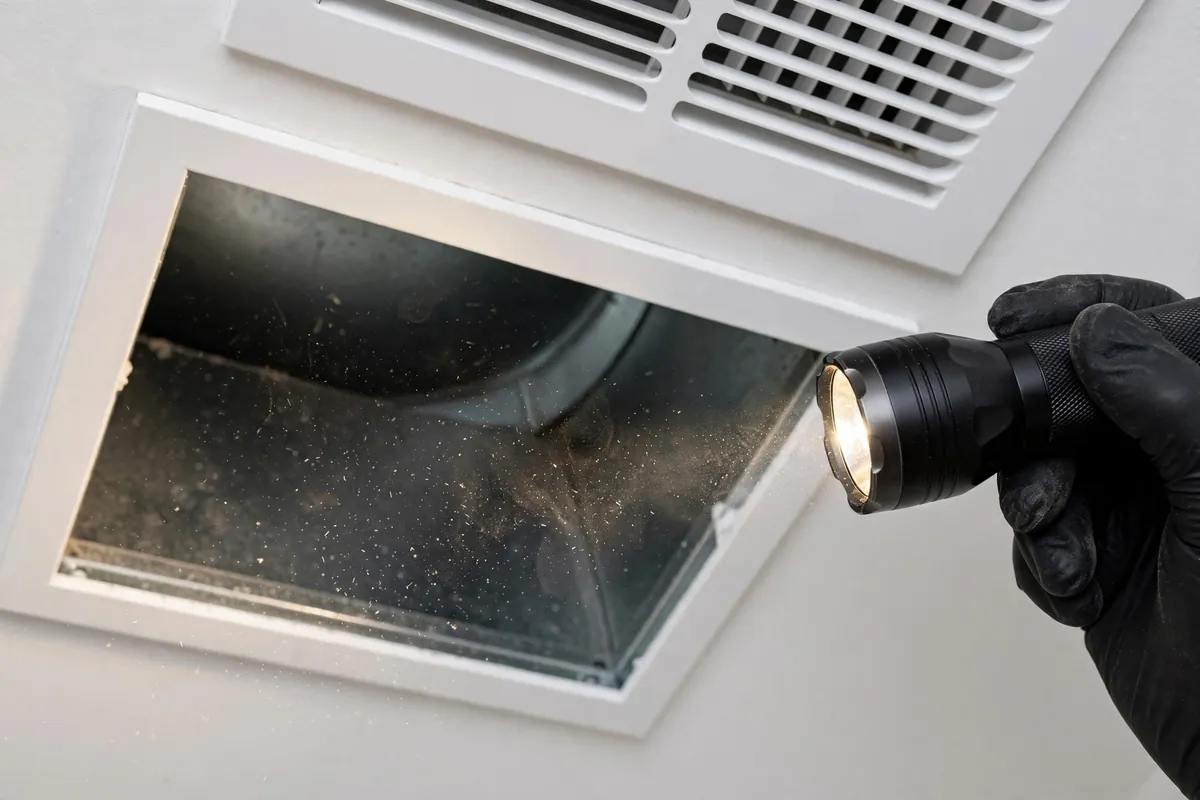
Dark spots, streaks, or fuzzy patches on supply vents are the visible tip — duct interiors you can't see are usually worse. Don't confuse dust buildup with growth, but don't dismiss dark, blotchy vent staining either.
4. Excess dust that never quits
If you're dusting constantly and filters clog fast, the system may be circulating particulate from growth or debris inside the ductwork. It's a softer signal, but combined with any sign above, it strengthens the case.
5. Uneven cooling or weak airflow in some rooms
Growth and debris restrict airflow; moisture-damaged duct lining sags and narrows passages. If one room is always warmer with weak vent flow while the rest cools fine, the duct run serving it deserves inspection — for mold and for damage.
6. A history of moisture in the system
Past drain-pan overflows, a coil that iced and thawed repeatedly, ductwork in a humid attic or crawl space, or any prior "the AC leaked" episode — all seed future growth. Systems with a wet history should be checked even without current symptoms.
7. The system is overdue for maintenance
No filter changes in a year, never had the coil or drain serviced, ducts never inspected — neglect compounds. Tampa systems work harder than most in the country; skipping maintenance here has proportionally bigger consequences.
What causes it in Tampa specifically
Three local factors: near-constant AC runtime (more condensation cycles), high ambient humidity infiltrating ductwork in hot attics, and drain lines that clog in the dusty season and back water into the pan. It's rarely one dramatic failure — it's the slow accumulation.
What to do (and what not to)
- Do get a professional inspection — duct interiors need proper access and assessment, not a flashlight waved at a vent.
- Do keep up filters, drain-line clearing, and coil service — prevention beats remediation every time.
- Don't spray bleach or household cleaners into ducts — it doesn't reach the growth properly and can damage components.
- Don't ignore it because "it's just a smell." Duct mold means every cooling cycle distributes spores through the whole house.
If growth is confirmed, our air quality specialists handle remediation with HEPA filtration and verify the system clean — plus guidance on keeping it that way.
Smell mustiness when your AC runs? Get it checked before cooling season peaks.
Call Now: (813) 845-8355